

Venice – a city turned to the horizon
June 29, 2026
A is for Anarchy, B is for Biennale
September 7, 2026Birds of Venice
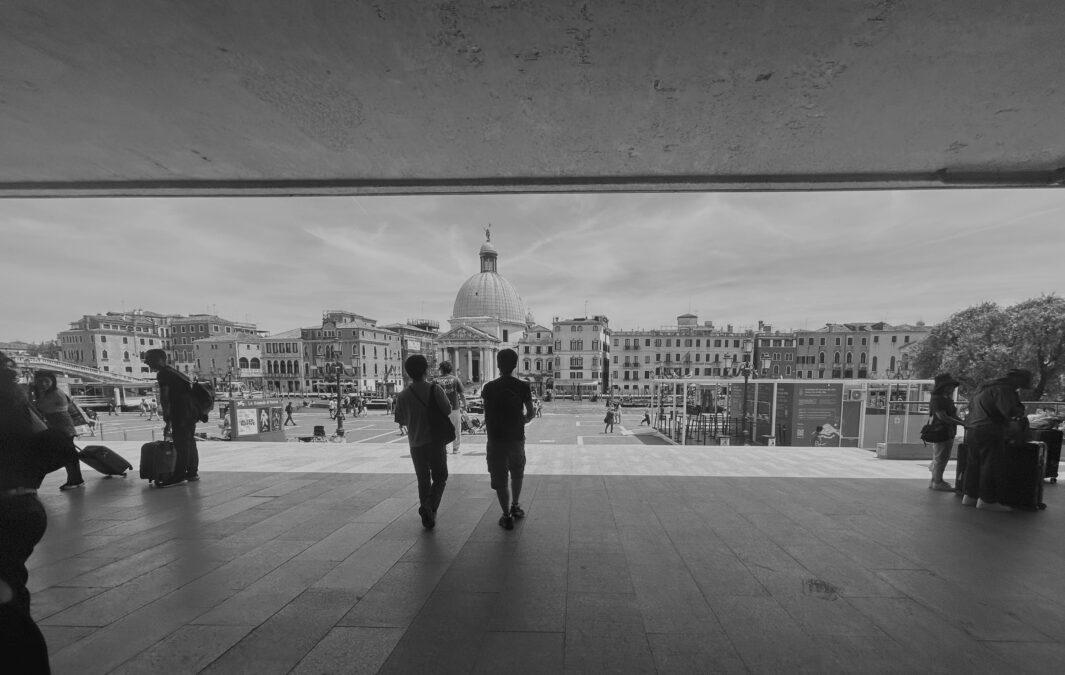
Edited with Labbet app
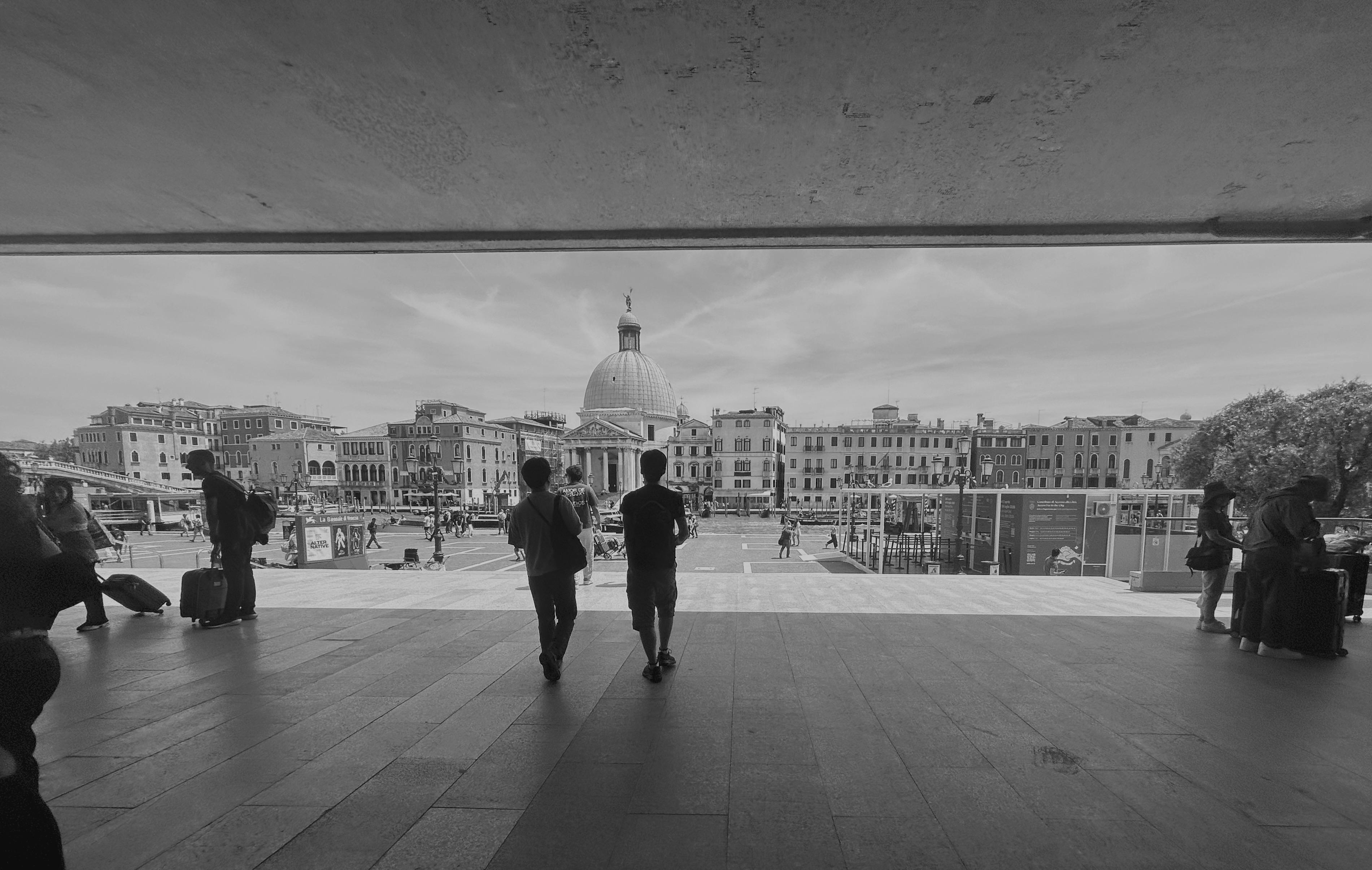
Venice: Supplied
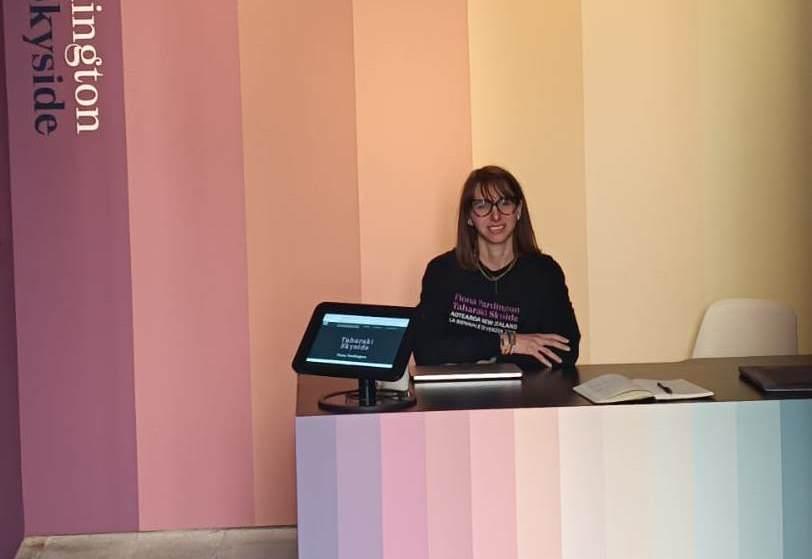
Meg Doughty is a Visitor Host and exhibition technician at Christchurch Art Gallery Te Puna o Waiwhetū. She holds an MA with distinction from the University of Canterbury. She is one of 10 Venice Attendants selected to represent Aotearoa New Zealand at the Venice Biennale. Here is her reflection of her time in Venice
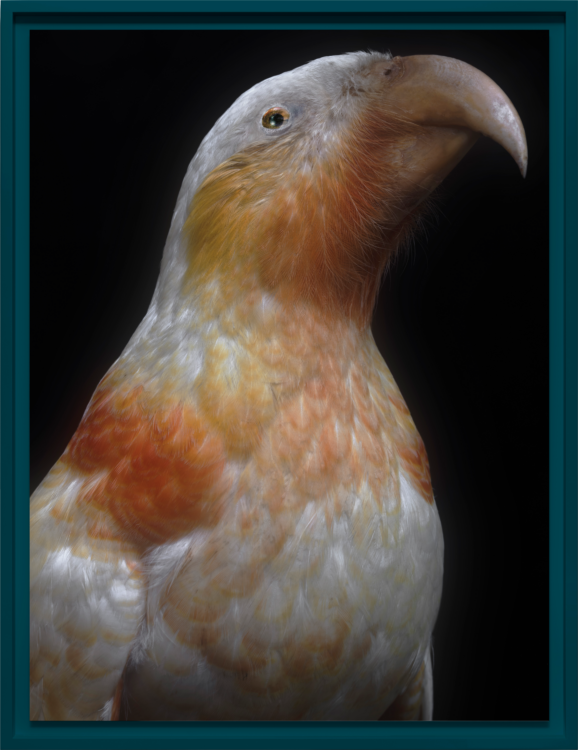
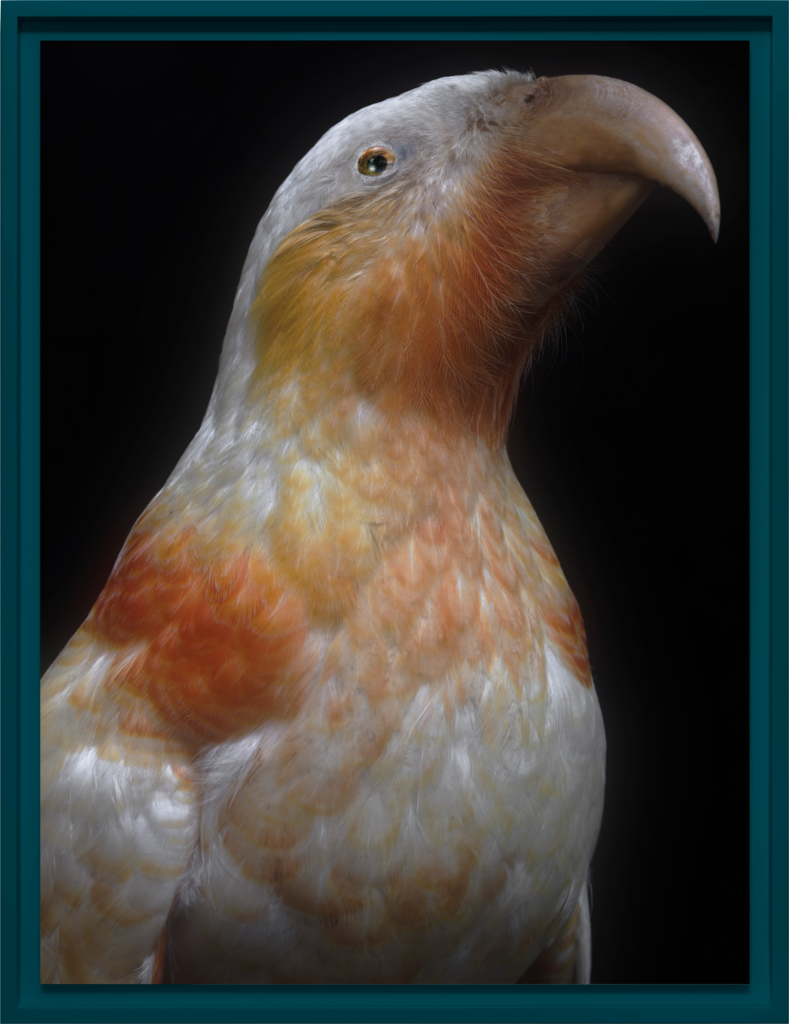
Seventeen towering portraits of native Aotearoa New Zealand birds look down at their audience. The pavilion is dark, save for the soft spotlights on the birds. Visitors step into the space and often gasp or shoot us a look of ‘WOW’ before carefully stepping over the threshold, closing the glass door behind them. The pavilion is cool, in June and July it is often at least eight degrees colder than outside. The pavilion sounds like ngā taonga pūoro, te taiao, silence and waiata. People emerge saying it is both soothing and serious, always contemplative. In the context of the wetland ecologies of Venice, it is rare to have flightless birds and their stillness. Every bird I have encountered here has been on the move; eating, swooping, bathing or preening. Biennale attendees are likewise noticeably moving at a clip, often with phones and guidebooks out, sporting practical footwear. Visitors to Taharaki Skyside slow down.
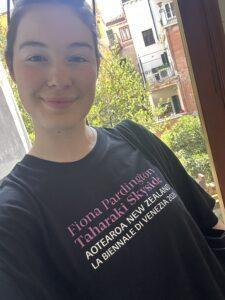
Meg Doughty in Venice: Supplied
I read Susanna Clarke’s Piranesi in my first week here and it echoes Venice uncannily; the labyrinth, marble, salt water, and birds. Venetian streets are narrow, winding, often coming to dead-ends and alleyways, then sudden canals and bridges, and the seagulls seem to have memorised the passageways better than people have. (Consequently, they know where the best places are to steal (my) focaccia from out of people’s (my) hands.) Piranesi’s home is full of sculptured halls and vestibules with lower halls flooded with the ocean. He calls it “the House” and it is his whole world. The signs of life are fish, water lilies, seaweed, birds and our limited cast of human characters. They are all “Children of the House,” he says. Piranesi sees the birds as messengers. The sculptures are essences, lessons, stories. The birds fly from sculpture to sculpture to tell Piranesi what he needs to know, so he believes. When an albatross arrives in the story my English Literature studies flared – the albatross, famous omen, Coleridge’s harbinger.
In Coleridge’s “Rime of the Ancient Mariner,” it seems to be the way people relate to the albatross that impacts the plot. When the sailors think the bird or its death is a curse, they experience an ill turn, when they think it is a messenger of goodness, they experience luck. Piranesi only ever wonders at, enjoys and accepts the albatross. He names the year in his self-made calendar after its arrival in his world, framing the time period of the book with a big sign saying, “pay attention.”
The messages people receive from the manu in Taharaki Skyside, like Coleridge’s and Clarke’s birds, depend on how they relate to them. Many come away feeling calmer and uplifted as if they’ve met with family. Others leave sombre and concerned for the birds’ well-being and broader ecological implications. Student groups have come through with specific questions about what “‘x” means. I translate where appropriate but otherwise encourage them to spend time with the exhibition to form their own relationships.
There are many messengers here in Venice. Piranesi’s sculptures are ready stand-ins for all of the art events happening around the city as allegory and expression. The birds here, too, are numerous! The personable pigeons of Saint Mark’s Square are well-recorded (it’s illegal to feed them). With its 126 islands across a shallow lagoon on the Adriatic and at the meeting of two rivers, “the floating city” is home to yellow-legged and black-backed gulls with their 1.5 metre wingspans. They roost on terracotta roofs, with fluffy babies almost as giant as their giant selves. Barn swallows flit and caw in and out of walls and roofs. They house themselves in structures people have built, following anthropocentric civilisation, returning to the same nests every year which Italy in turn protects by law. Little egrets perch on boat posts rising from canals at angles that match all the jaunty bell towers. Our landlady told us many birds moved in during the pandemic, and she knows a family of ducks who took over one of the local campi (neighbourhood squares that used to be cultivated fields). After humans resumed their patterns of life, the ducks stayed and (perhaps some generations later) can still be found in that campo.
Even so, the biggest and most colourful birds in Venice at the moment are Fiona Pardington’s portraits. Forming their own convocation and surrounding visitors on three sides, the birds’ messages become urgent, what does the more-than-human tell us? Are we listening? Do we know how? How do places help us to remember?