
Birds of Venice
August 21, 2026
The heat, the shadow and the water
September 30, 2026A is for Anarchy, B is for Biennale


A metallic hoarding on Lido, one of Venice’s islands, waiting to be plastered. Image supplied.
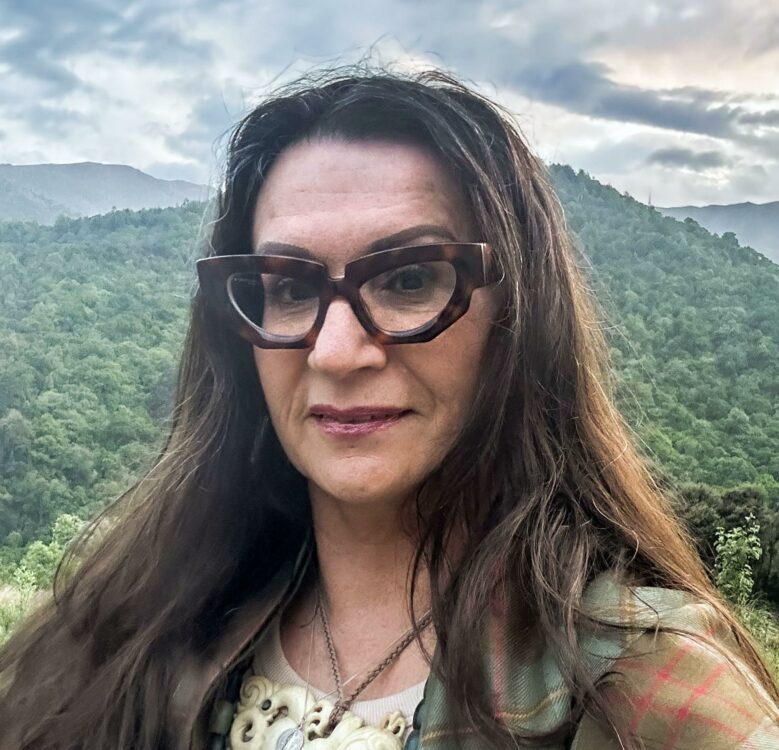
Jane Wallace is Curator at The Physics Room, a contemporary art space in Ōtautahi, Christchurch. One of 10 Attendants chosen to represent Aotearoa New Zealand at the Venice Biennale, she reflects here on her time in Venice
In the late afternoon, three or four kids start a game of soccer in their backyard opposite the pavilion. They make use of our fence as a tactical structure or a comic act where the ball is tossed over and they dare one another to retrieve it. At this time of year, many long-standing Venetian families depart for their holidays and the local businesses are closed, a handwritten “CHIUSO PER FERIE” note taped to the door. The biennale stays open, though, through the canicula, the carnival, Sundays and ferragosto, so it is nice to have this regular makeshift sports game as a reminder of the Venice where people live and work and play.
As everyone who has ever written about the city before has known, Venice is a composition of endless versions of itself. There is friction where these things meet: the anarchist A, encircled, and ‘Viva Palestina’ are graffitied on the side of centuries-old churches and theatres; these churches and theatres now house jumbotrons and colossal installations of contemporary art. The power goes out – sometimes scheduled, sometimes not – as the grid is overloaded, while projectors and air conditioning units continue to whir. The Giardini’s 1952 ticketing booth, designed by modernist architect Carlos Scarpa, has been repurposed as an auxiliary exhibition space for collective fierce pussy’s deconstructed Palestinian flag artwork, we are here. The workers at the new ticketing entrance don’t know where the work is when asked. It is less than fifty metres away from them. The kids keep kicking the slightly deflated soccer ball around.
The Palestinian flags hanging from apartment windows have faded to terracotta and teal after months or years visible in the sun.

Red lighting at Canicula exhibition at the Complesso dell’Ospedaletto. Image supplied
Places with a long history of fascism also tend to have a parallel history of resistance. Venice is the place where Hitler and Mussolini had their first meeting in 1934; in Giudecca, the suburb of Carnareggio and nearby Marghera, there has remained long antifa, anti-industrialist and workers’ rights movements. The international anarchist gathering of 1984 was also held here, the first time in many decades that such a meeting had occurred; this event was reprised on its 40th anniversary in 2024.
These legacies are deeply inscribed on the city. In the same way that the drama of The Merchant of Venice or Italo Calvino’s unravelling Invisible Cities are palpable in the intricate network of canals and alleys, the fascist and anarchist politics remain legible, even as the struggle might have shifted out of factories and towards questions of tourism displacement and the working conditions for the thousands of service workers who keep the economy operating.
We visit the Lido on one of our days off. It is a long island that sits below the historic city with an air of glamour specific to filmic mythos, beach resorts and reportedly one of Rick Owens’s residences, but it is also a bit dated. This is maybe a dumb thing to say about an island that is so old but a specific 1960s mood engulfs the place, the decade of the island’s last real estate boom. It looks like there is a lot of construction about to take place though, on account of the pallets of building materials and footpath closures. But upon reading the site plan affixed to one hurricane fence, I realise this large-scale renovation is actually the beginning of preparations for the Biennale Cinema. The street is lined with metallic hoardings waiting to be plastered in premiere signage. There is basically no advertising in Venice, only posters for art exhibitions along the narrow alleyways that peel off every time it is very hot or wet, so it is strange to encounter a billboard, even an empty, anticipatory one.

Ticket artwork, we are here, by artist collective fierce pussy, 2026. Image supplied
Seeing the Lido like this is like seeing backstage, the calm before the circus and a reminder of the biennale calendar that propels Venice, in addition to the Gregorian and religious ones. Art, architecture, cinema, dance, music, theatre -architecturecinemadancemusictheatre. It’s not really a temporary event as it appears at first, but a constant morphing of one edition into the next. I wonder what it is like to actually try to live in this context and what it means to be expected to speak English all the time. I learn some basic sentence structures and feel like it’s not enough. When I pass the kids back their ball they ask “parli italiano?” and I say “no” and they ask for a high five.