
A is for Anarchy, B is for Biennale
September 7, 2026The heat, the shadow and the water
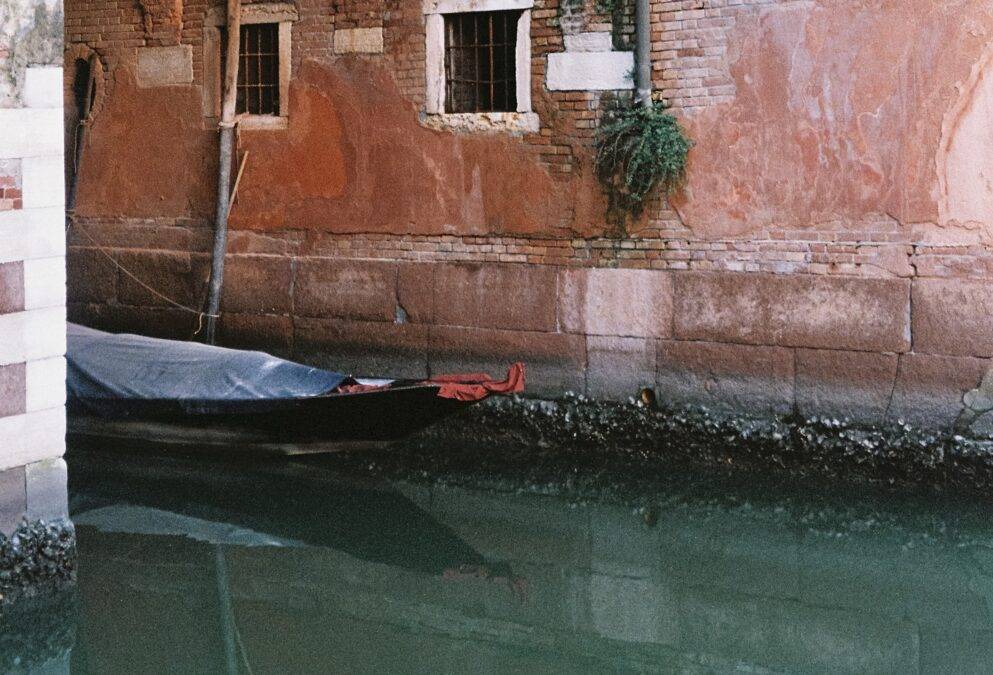
A black gondola sits stowed and covered at its mooring along a narrow canal. Image supplied.
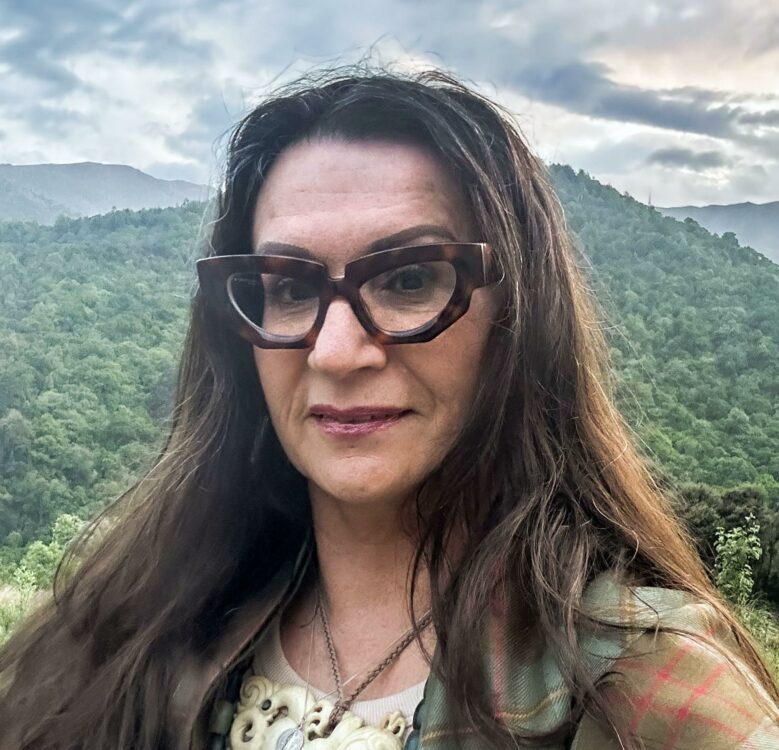
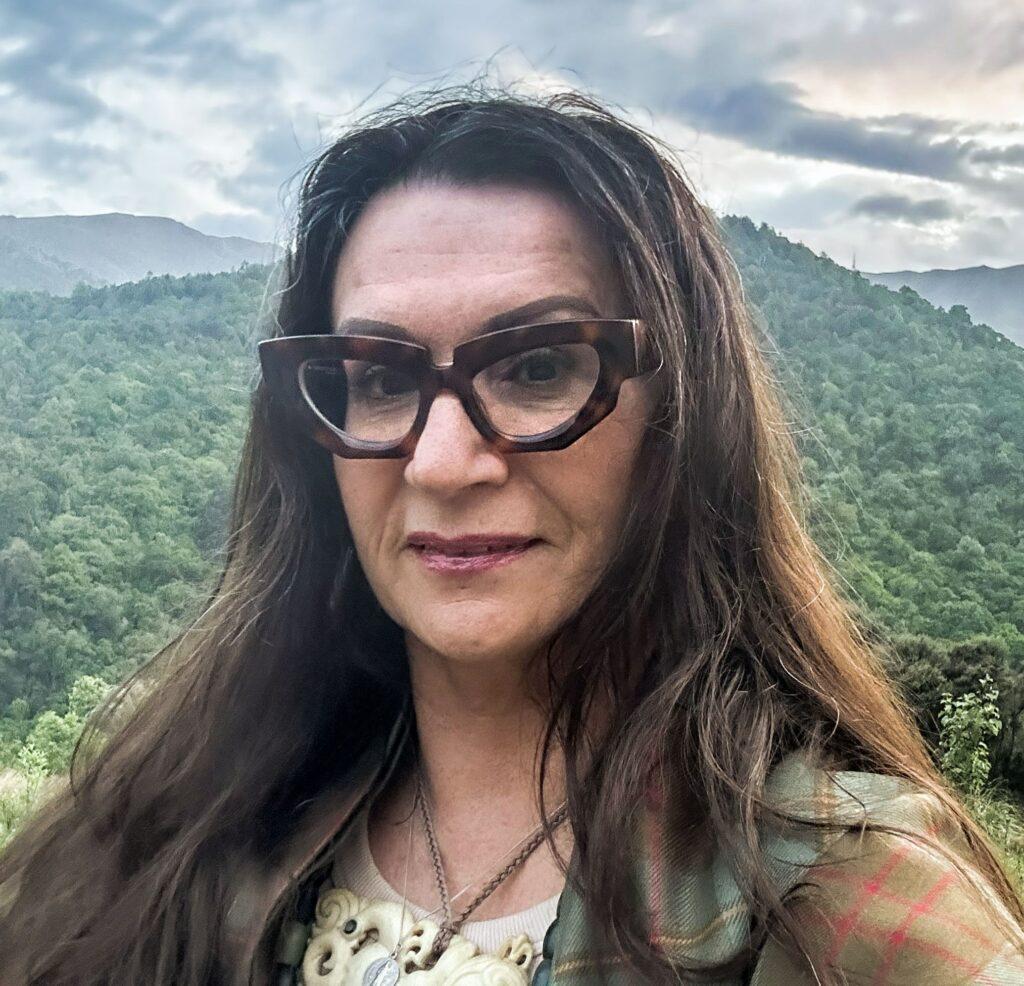
Geo Thompson-Skipworth (Ngāti Porou, Ngāti Kahungunu) is one of ten attendants selected to represent the Aotearoa Zealand pavilion in Venice. She is a visitor host at Christchurch Art Gallery, weekend shift supervisor at The Physics Room, a practicing artist, as well as director and co-founder a new artist-run space in Ōtautahi, The Green Room.
“What cannot be said, or said clearly, in one language or culture may be said, and said clearly, in another language or culture. Acknowledging other kinds of knowledge and other partners in conversation for other kinds of conversation opens the field for infinite discursive and nondiscursive exchanges with unfathomable codifications and horizontalities.” – Boaventura de Sousa Santos [Epistemologies of the South: Justice Against Epistemicide, 2014]
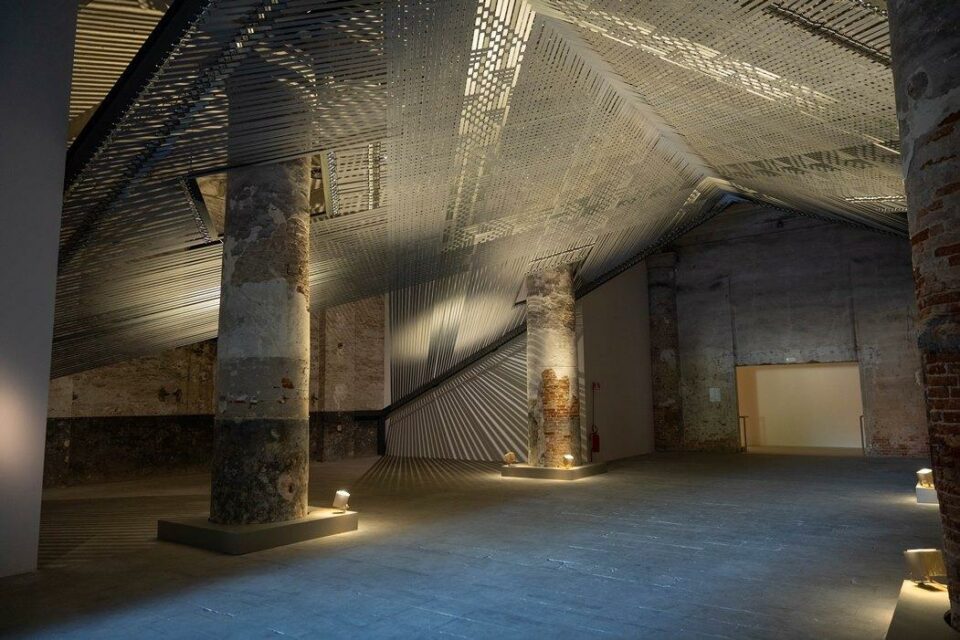
Reflection is inherent to travel, but in the context of this year’s Biennale, I’ve found myself approaching Venice through its less immediately perceptible qualities. Suggestions of slowness have appeared in the majority of pavilions across the city. In In Minor Keys curated by Koyo Kouoh, there lies an invitation to “slow down and tune into quieter registers, as a reminder of the contemplative act of listening”. The same quality of slowness seemed to extend beyond the pavilions.
Venetian facades reflect the complexion of stone fruits: shades of plum, nectarine, cherry, apricot. Everywhere, colour seems to surface from the city’s weathered skin, catching differently in the heat, the shadow and the water. These colours, softened by age and exposure, sit somewhere between the organic and the architectural; the city appears less built than ripened. Perhaps this is a kind of slowness that Venice offers – a reminder that surfaces accumulate time, that things can be altered without losing what came before, and that looking closely can reveal histories embedded in texture and colour.
The view from a ferry deck heading toward Giudecca across the Venetian lagoon under a slightly overcast sunset. Image supplied.
Within Taharaki Skyside (curated by Chloe Cull and Felicity Milburn), our visitors immediately sensed the pavilion as a respite, an antidote to the fussing alleyways and solleone heat. The spectrum of coloured frames, much like the arms of a kuia, stretches wide to take you in. A single gesture, sweeping across the room, portrait after portrait. With mana and vulnerability, Fiona Pardington’s photographs arrive for the viewer – painterly, commanding, resonant. Within the space, the photographs take on a presence beyond the image.
The extinct manu are present through their photographic representation, yet their presence is inseparable from the ecological absence they signify. A species no longer inhabiting the world, and with it, the relationships, habitats and forms of knowledge that constituted its ecology. In this sense, Pardington’s photographs operate not only as portraiture but as a form of memorialisation, asking us to encounter extinction as something lived and felt rather than as an abstract historical fact.
Where Pardington’s photographs can stand as a stark warning of anthropogenic loss, the Gaza Genocide Tapestry (curated by Faisal Saleh, Jehan Alfarra, Jan Chalmers and Ibrahim Muhtadi) confronts an active, unfolding violence. Here, embroidery ceases to be craft and becomes an urgent testimony against an ongoing erasure. Through the slow accumulation of individual stitches, destroyed places, displaced communities, and lives taken are forced into a permanent, collective material memory.
These two installations operate in entirely different registers and must not be collapsed into a convenient equivalence. Pardington’s work holds the heaviness of an ecological past, whereas alongside their own histories each
Palestinian tapestry acts as a vital, resistant barrier against an ongoing attempt to overwrite a people’s present. What ultimately connects them for me, is not their context, but their insistence on material as a vessel for loss. They both demonstrate art’s capacity to resist disappearance – proving that it is not enough to simply preserve objects; we must actively create the conditions through which absence is confronted, histories remain fiercely contested, and loss is made visible.