
In studio with Fiona Pardington
May 20, 2026Venice – a city turned to the horizon
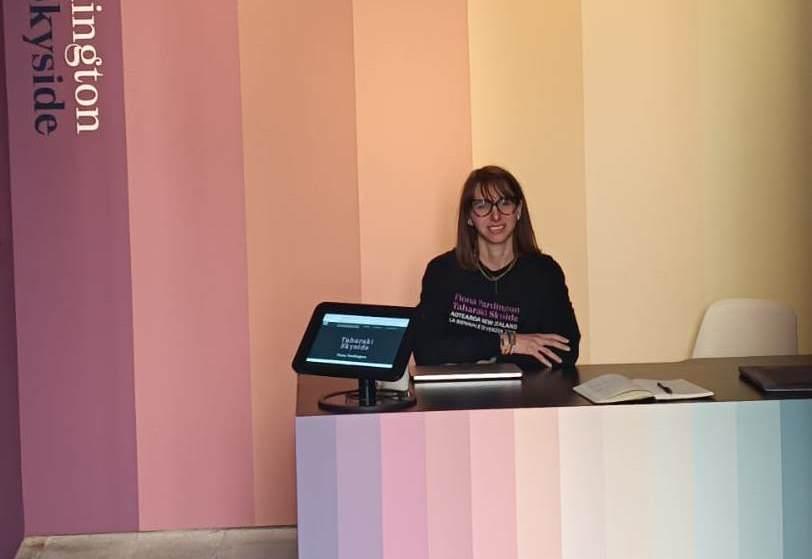
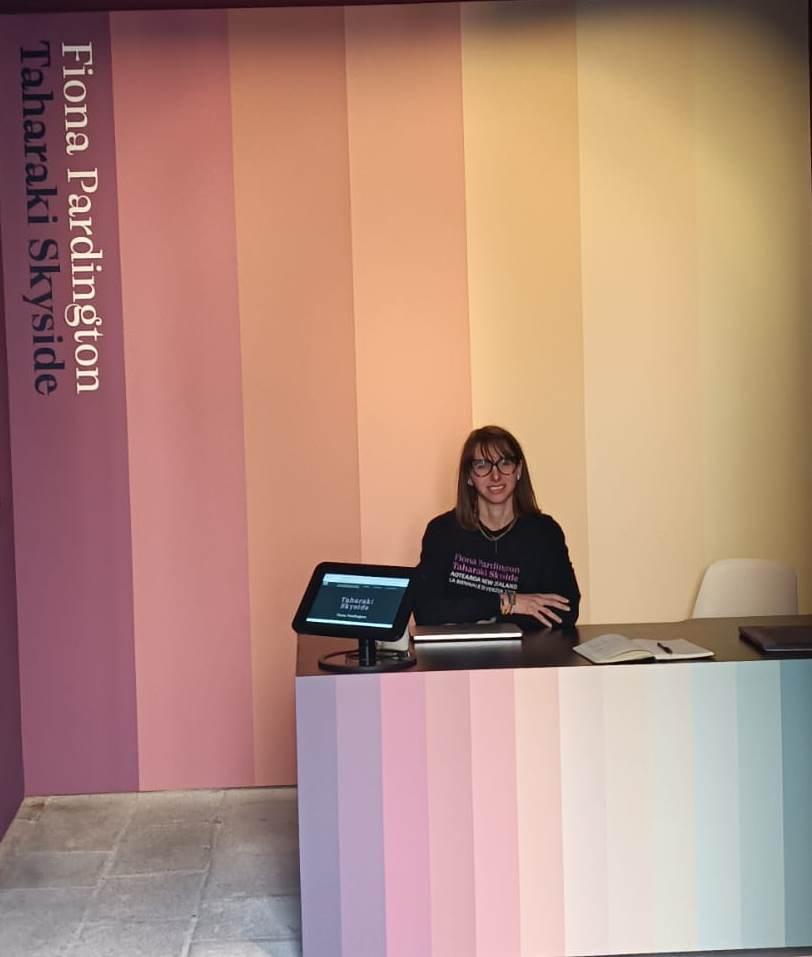
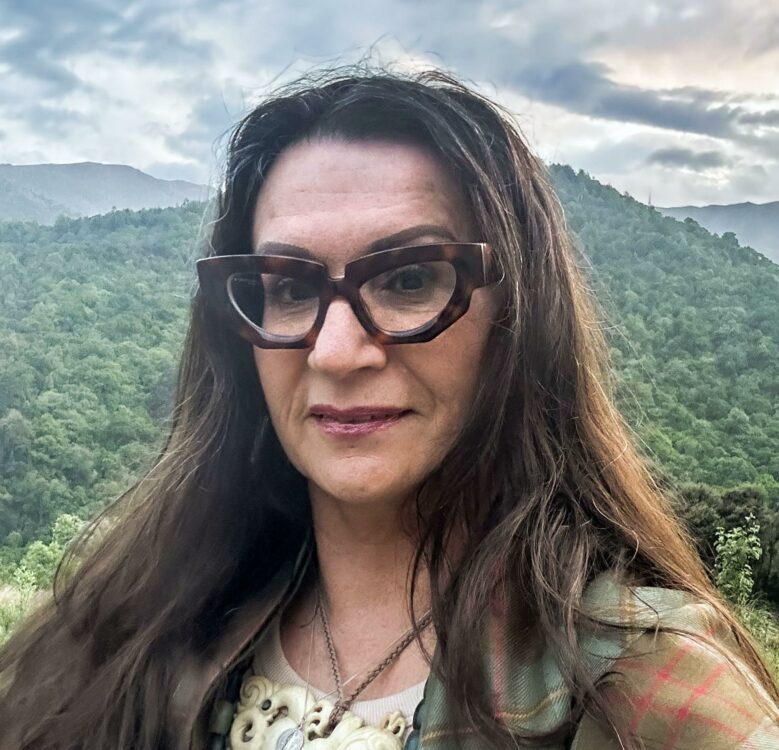
Giulia Naspi at the front desk of the Aotearoa New Zealand Pavilion at the Venie Biennale. Image supplied.
Giulia Naspi works for Christchurch Art Gallery, holding the dual roles of Visitor host and Tour Guide, and Visitor and Event Host. She one of 10 Venice Attendants selected to represent Aotearoa New Zealand at the Venice Biennale. Attendants are responsible for supervising, promoting and managing the day-to-day operations of Taharaki Skyside during the Biennale. Here is the first in a series of attendant’s reflections on their time in Venice.
My time in Venice is coming to an end, and looking back on the past six weeks, it all feels like an incredible adventure.
As an Italian who has lived in New Zealand for a long time, I felt an immediate need to share my knowledge of New Zealand and Māori culture with an audience, both Italian and European, mostly unfamiliar with the topic.
It was wonderful to see that, even without an in-depth explanation of the exhibition’s theme and without prior knowledge of New Zealand and Māori culture, a large portion of the audience perceived and captured the essence of the exhibition, and the message Fiona wants to convey to the world.
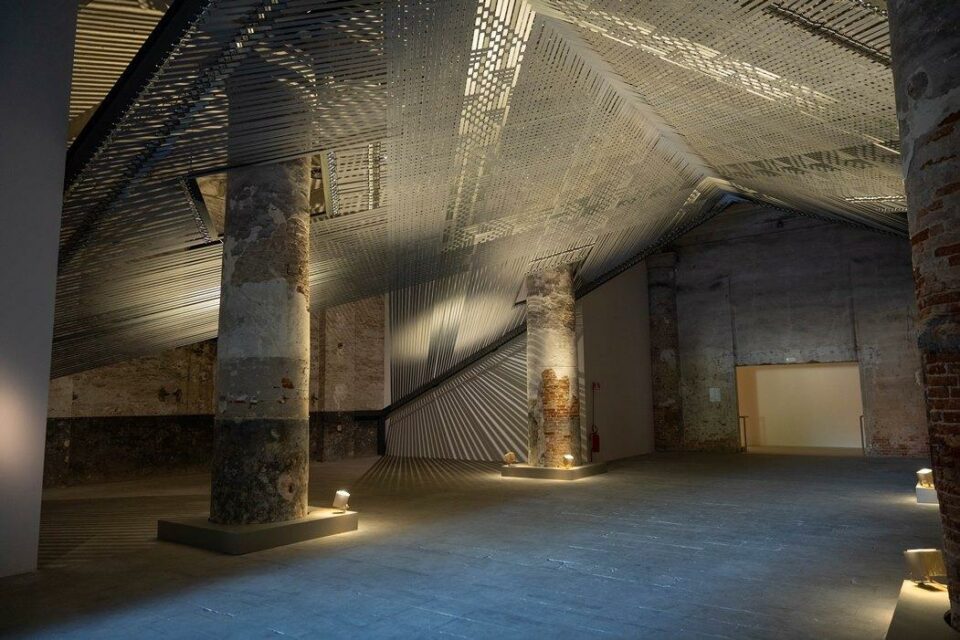
During quieter moments in the pavilion, I deepened my knowledge of the manu/birds, the exhibition’s significance, and Fiona Pardington’s work, past and present. This enabled me to lead guided tours for individuals and groups of various sizes, in both English and Italian.
Understanding why Fiona Pardington photographed taxidermied birds and how this fits into the broader theme of this year’s Venice Biennale, In Minor Keys, was immensely captivating. Above all, the awareness of how these birds are still suffering the consequences of colonisation and the impact of human actions created a feeling of solidarity, understanding and brotherhood, in what is a tragedy shared by many nations, uniting them and bringing even distant New Zealand closer.
From my perspective, as someone who has based much of my professional life on sharing my knowledge of culture and art with a more or less informed and aware audience, it was truly satisfying and immensely gratifying to hear so many positive comments and expressions of appreciation from the Biennale audience.
It was very pleasant to discuss the many facets of Māori culture with the Italian audience. One thing that struck me most was the reaction to the presence of pounamu (greenstone) in the exhibition space. Many visitors reported feeling a positive energy when they touched it, and it became an auspicious gesture.
I see this experience as a major step forward in my professional growth. I made independent decisions at times and managed the exhibition alone for much of the period. I realised how difficult it is to plan everything and how certain things are impossible to predict. But in unexpected times, you have to be prepared for anything. I now have a level of confidence I didn’t have before, but I’m also more aware of how something completely unknown can reach different audiences.
Many visitors returned repeatedly because they perceived the space as a peaceful refuge from the hustle and bustle of Venice, and wanted to feel the birds’ energy once again. I met many lovely people, with whom I had the pleasure of having long conversations, exchanging knowledge, impressions and opinions. This is one of the magics of art: uniting very distant and diverse people and places and exchanging opinions in a peaceful and constructive way.
Venice has always been a multicultural city, welcoming and blending people and cultures of all kinds. Over a hundred years ago, it opened its doors to world art, allowing individual nations to have their own ‘homes’, the pavilions, where they could present their art and share it with the world. From this city, that has always turned toward the horizon, the Taharaki that Fiona Pardington saw in that lagoon – her birds take flight all over the world.